Daily challenges (cont)
Weather forecasts
An area where technology has advanced immeasurably. Yes, that’s general a good thing, but not if we become overly dependent on it and loose basic skills.
Sailors had to rely on their own observations and the old sayings to help them, many of which still old true. The original mercury barometer was invented in the mid 1600s but was problematic to use at sea. Cook’s voyages use a barometer although it was not until much later, perhaps early 19th century, that the navy began to regularly use barometers at sea.
And that’s how it stayed. Do we really need anything more? Of course we could say that of paper charts and so many things. Most of us embrace new technology that makes sailing more enjoyable and safer. But hopefully we don’t lose the old skills, as there is a high likelihood we will still need them. You might have used a Long Wave radio to listen to the shipping forecast, an SSB radio to download weather facs or Navtex. Then came smart phones/ tablets and 4G/5G to allow us to get weather when coastal cruising.
But what about getting weather forecasts offshore? You can still use an SSB and Navtex will cover long distances but for most people looking to solve this problem there are two choices (If you are considering high latitudes that’s beyond this scope)
- Something linking to the Iridium satellites
– Satellite phone
– Iridium Go or Exec - Starlink or Starlink mini
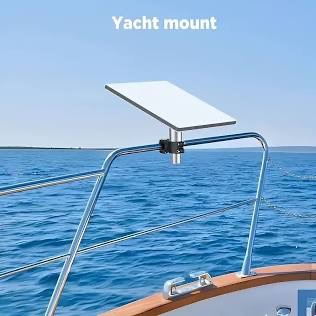
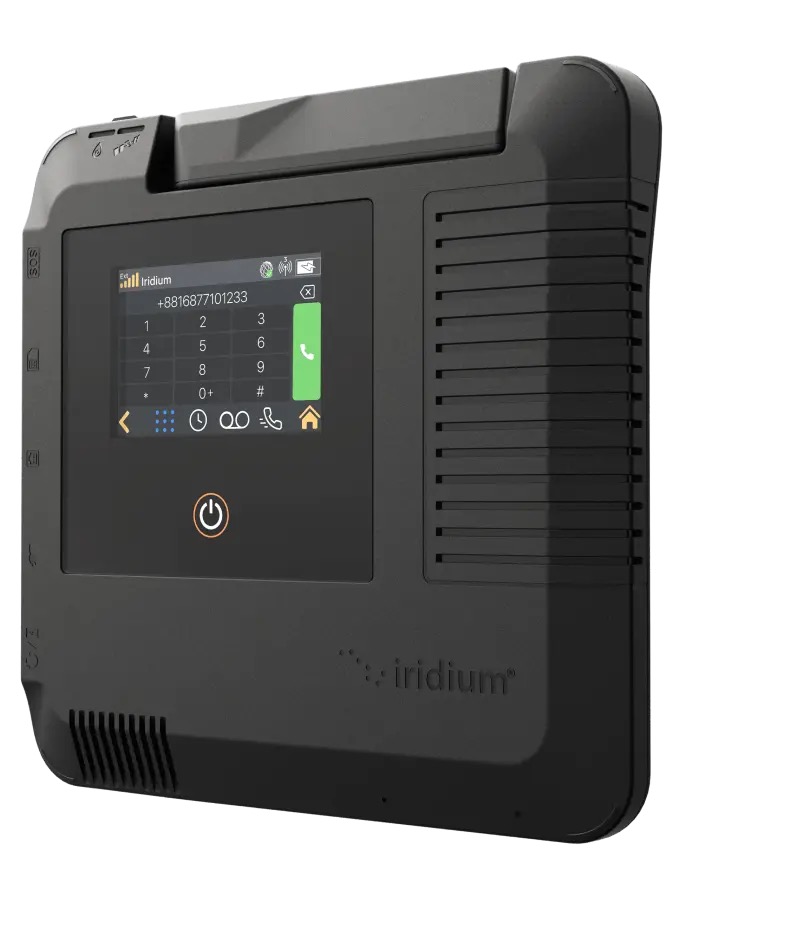
I’ve found this a difficult choice to make. My big question was would Starlink work offshore as it seems a little sensitive to the direction the dish is pointed. I was at the point of going down the Iridium route as I only need to download a weather grib file and so don’t need a high speed connection. But the Iridium installation is complex. Then two things happened. One, I got confirmation from a reliable source that they had no problem, apart from heavy rain, using Starlink Mini offshore. Two, I produced a table of pros and cons, shown below.
With the monthly costs roughly the same, it seems worth trying Starlink first given how much cheaper it is and with the obvious benefit of much faster speed.
Costs and performance
| Starlink | Iridium Go | Iridium Go Exec | |
| Hardware cost | $250 | $1000 (no data hub) | $2000 |
| Initiation cost | zero | $50 | $50 |
| Monthly subscription | $165 | $155 | $170 |
| Offshore Data | $2/GB | Unlimited data | Unlimited PW/12MB/day |
| Speed | 100 -250 Mbps | 2.4 kpbs | 88 kpbs |
Installation considerations
| Starlink | Iridium Go | Iridium Go Exec | |
| Antenna/Dish location | -External with clear view. -A little sensitive to direction. -Easy to move and reposition or store.-Dish has built in wi-fi router | -External. -Not overly sensitive. -Fixed.-antenna attaches to additional “wifi” unit inside the boat. | -External. -Not overly sensitive. -Fixed.- antenna attaches to additional “wifi” unit inside the boat. |
| Wiring | Wi-fi | Has a 12m cable to link antenna to the unit | Limited to 5m cable linking antenna to the unit |
| Power supply | Does not reliably work off 12 volts. Needs step up unit (easy to do- $50) | 12v power to the unit | 12v power to the unit |
I have not yet bought and installed the Starlink Mini. I will report back when I have done so.


Leave a Reply