Daily challenges (cont)
Household waste
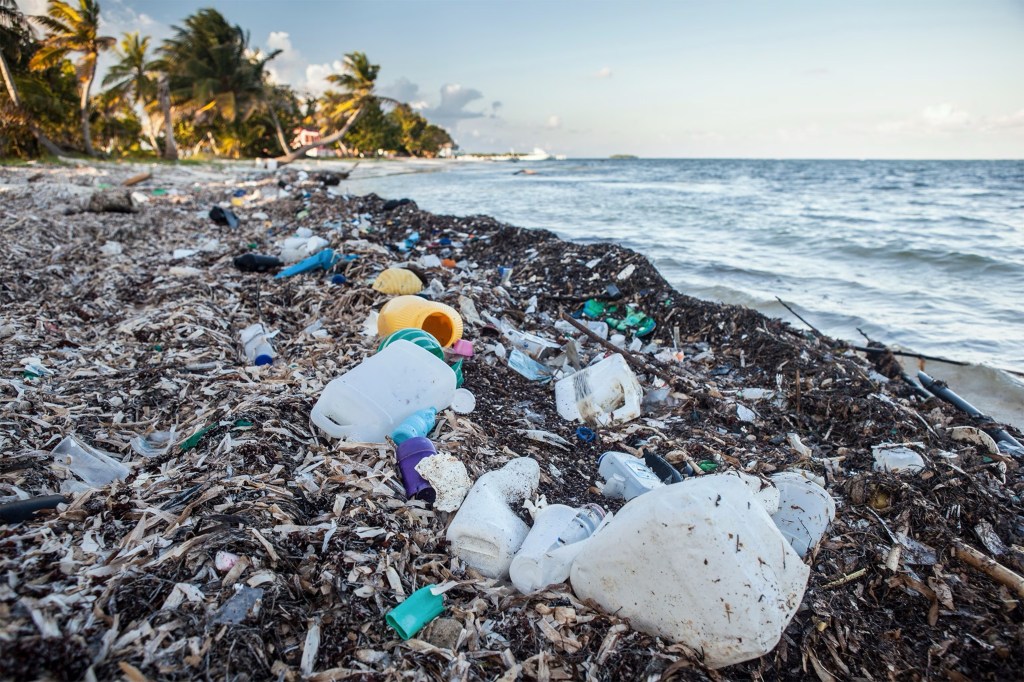
This should be easy, right? Well yes…and then no. I don’t want to come across “preaching”. In the end it is your conscience.
Can we anchor ourselves to the following principles?
- We sail to enjoy beautiful unspoilt nature. So let’s do our best tokeep it that way and keep the environment firmly in our mind.
- We had space to bring all our provisions on board so we should have enough room to store all the waste.
- Smells can make things unbearable, tempting us to throw things overboard we shouldn’t, so keep them to a minimum and have good refuse sacks. Wash old cans, bottles, etc with salt water .
Now let’s set ourselves the aim of not throwing anything in the sea and then consider what might be acceptable. Here’s my list, add your ideas in the comments section
- Plastics of any sort. Never throw overboard. They will be there in a million years.
Cut bottles into small pieces and store inside another bottle until you can safely dispose of them. PET is highly recyclable so it is generally worth keeping separate. - Cans. Never throw overboard. I know you think the “tin” ones will rust but they are coated to stop them rusting, at least on the inside. Cut the bottoms off and crush them and store ‘til you can dispose of them. Aluminium is easy to crush.
- Bottles. Yes, they will eventually become sand again. But really! Keep and dispose properly.
- Cooked food. Hopefully, you eat everything! But things go off. This is a tricky one. If it is cooked food that is likely to be eaten, I think it can go overboard but only if you are far out to sea. Think twice about throwing raw food overboard. It could take a long time to rot: it’s in the sea not land so there are no worms and slugs out here!
- Fruit skins. NO. Orange peel and banana skins take quite a while to rot on land, at sea they will end up on a beach long before they have rotted away.
I know this seems a bit of a pain. But we chose to go to sea and that leaves us with a few additional challenges to take care of, waste being one of them. Consider double bagging any waste that is going to smell and a good place to store garbage bags is in the anchor locker. Just don’t forget to move them in good time before you need to drop the anchor!
Power Management
When sailing I really focus on minimising power consumption as much as I can. Ina marina I am a bit more relaxed but I have realised there seem to be two types of sailors. Those who are determined to have as many home comforts on board as possible, installing air conditioning, washing machines and a freezer for starters. They are then forced to install large battery banks and masses of solar panels or hook into shore power every other day. Then there are those who accept sailing is a different way of living and take every effort to limit their power consumption but still live comfortably. These days most people want to have a fridge, which remains one of the highest power consumers on my boat. But there was a time when a fridge was not an option.
Whichever type of sailor you are, it makes sense not to waste power. Some things are easy-
- Replace all light bulbs, including navigation lights with LEDs. They consume very little power and have a long lifetime.
- Switch off everything you are not using and avoid “standby” unless necessary.
- For the fridge
– add insulation if you can
– keep it as full as possible, even if you fill empty space with water bottles
After that, it gets more difficult.
– Having a wind vane rather than an autopilot may save ~40 Ah per day.
– does the chart plotter need to be on all the time. Does it have a power save mode?
Having a good quality battery monitor like the Vicron BMV-712 smart battery monitor makes it much easier both to monitor consumption and also understand how much power each piece of equipment uses. If you are at anchor monitor the consumption which will mainly be your fridge and lights. Making a list of all equipment their amp rating so you can make some accurate assessments of consumption.


Leave a Reply