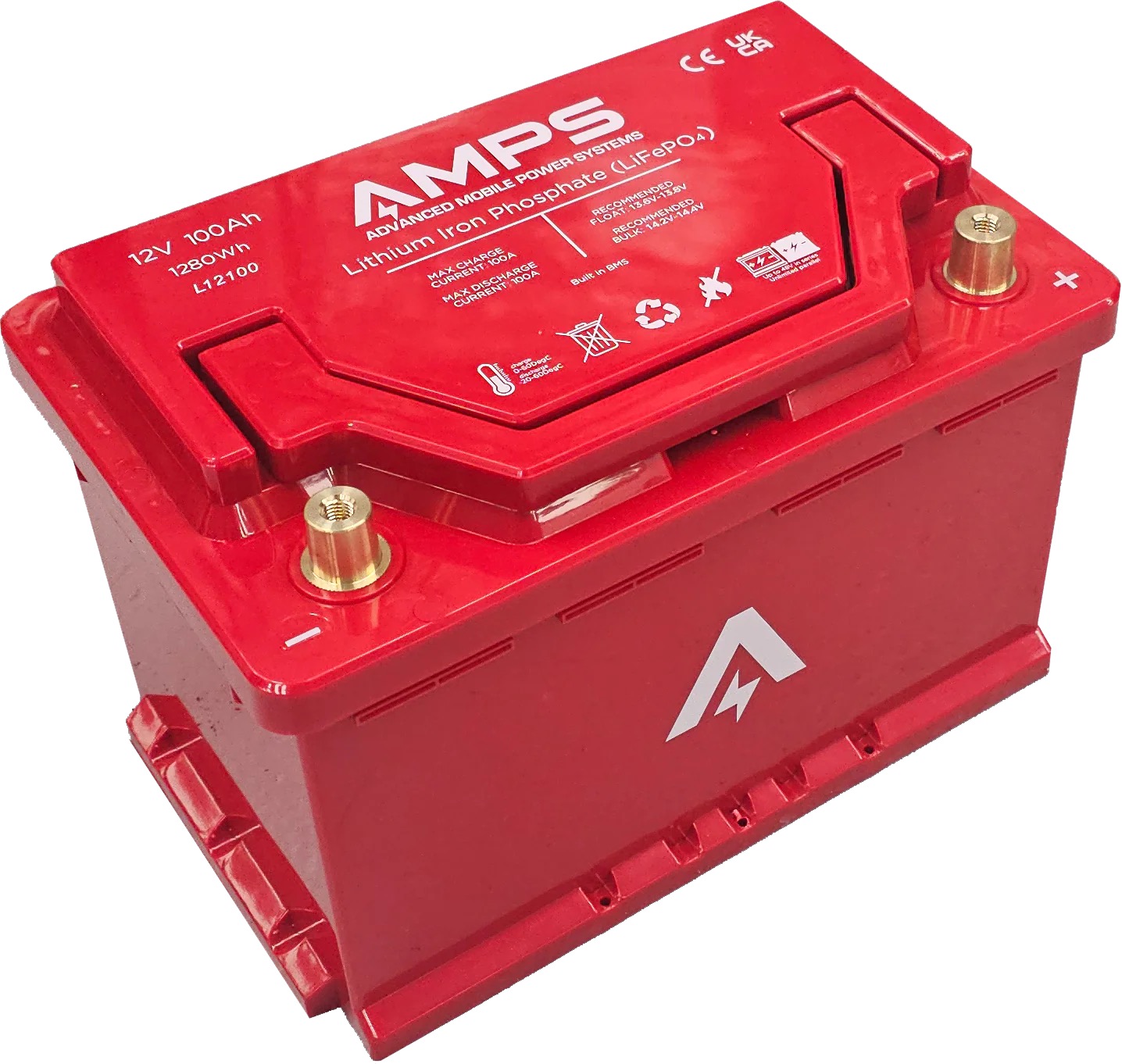
Look on any boating forum and you’ll find pages and pages of discussion on lithium batteries. Some of it good and some of it terrible. I researched this topic for a couple of years, debating back and forth between AGM, lead carbon and lithium (LFP). I finally went for LFP and have no regrets. The following is the results of my research and details of the installation. It is important that you make your own decisions appropriate to your boat. To be clear, here I am talking about changing house batteries to lithium. Do not change your starter battery to lithium as well, as I explain later.
Some basic information about lithium batteries:
- They can accept a faster rate of charging than other types of batteries, making them ideal for a boat with solar charging. However, from my research I found information that indicated that the life of the batteries will be better when charge rates are kept to 0.3 C. For my 300 ah battery bank that means 90 amp.
- They can be more deeply discharged than lead acid, which typical should not be discharged below 50%. LFP in theory can be full discharged but in practice it is best not to go below 10% remaining.
- They should not be charged below 3 deg C (data varies, certainly not below 0 deg C.)
- LFP batteries should not be overcharged.
- They will hold their charge well when left for a long period of time but benefit from being left at say 80% rather than fully charged.
- They can be cycled many many times. It has been suggested most boat owners will never have to replace their lithium batteries … if they are good quality and have not been abused!
Additional considerations when designing your installation.
What type of BMS (battery management system)
There are essentially two routes to go. The difference is due to the BMS (battery management system). All LFP installations need a BMS in the system. The BMS is a critical component at it manages the charging/discharging routine of the battery.
- External BMS.
In this type of installation, the LFP battery is a basic battery, the charging routine of the battery is managed by an external BMS. Victron and Mastervolt typically have this arrangement and anyone building their own batteries will probably follow this route. The Victron website is a fantastic source of additional information. - Internal BMS.
In this type of installation, the BMS is incorporated into the battery circuit.
(I chose this route using Sterling LFP batteries)
How to charge your LFPs
There is little point in having a huge battery bank unless you have the appropriate means of recharging it and the correct charging method is critically important both from a safety standpoint and to ensure you don’t kill your new batteries.
- Charging from solar panels
This is straight forward. The solar panel needs to be wired to an appropriately sized MPPT controller which is then wired to the batteries. - Charging from a wind turbine or water turbine.
This is more complex. With a lead acid battery a windvane can be left charging the batteries as the lead acid can be constantly charged without damage. As mentioned LFP should not be overcharged and this is managed by the BMS. Once the batteries are fully charged the BMS will disconnect the windvane/ water vane and this will cause damage to that equipment. When disconnected the vane charging needs to redirected to a lead acid battery. Keep your starter battery as lead acid and you can redirect the charge to that battery. - Charging from the alternator.
Do not connect your alternator directly to your LFPs.
Because the LFPs “acts as a sponge” and can accept high charging they will burn out your alternator. You might not see this If you are often on shore power and only make short trips. In this case your LFPs will not discharge much and the alternator may quickly recharge without burning out. However as soon as you go on a longer trip, you will likely have a catastrophic failure of the alternator.
If you don’t believe me, take a look at this video from Victron.
https://www.victronenergy.com/blog/2019/10/07/careful-alternator-charging-lithium/
To ensure safe charging from your alternator either
i) Keep your starter battery as lead acid. Then connect your starter battery to your LFPs via a battery – battery charger (B2B). This way the alternator first charges your starter battery and then via the B2B charges your LFP. I used the Sterling B2B. It is an excellent piece of equipment from a long standing and highly regarded UK company.
ii) Keep your starter battery as lead acid and use a smart regulator attached to the alternator. Balmar are one producer. https://balmar.net/application/marine/balmar-regulators/ - Charging from shorepower.
Simply install an AC-DC battery charger that has a charge setting specific to your LFPs. Typically, most boats will be plugged in to shore power for a decent amount of time, so there is no need to charge fast and charging more slowly will extend battery life. I chose a Sterling charger to match my Sterling batteries - Charging at low temperatures.
If you are sailing in low temperatures you will need to find a way of warming the batteries slightly before they start charging.
The Sterling batteries have built in heating. You may find other brands have the same feature.
What happens if you have a lithium starter battery and lithium has batteries?
This is my understanding; I encourage you to check further. As mentioned before, lithium batteries do not like overcharging. As some point your house batteries will stop charging, triggered by the BMS. All output from the alternator then goes to lithium starter battery. Assuming there is a BMS in the starter circuit, the BMS here will also stop charging causing damage to your alternator. If there is no BMS you will overcharge the battery again causing damage.
Keep things safe and keep your starter battery as lead acid. There is absolutely no benefit in changing it. Quite the opposite.
Do you have a bowthruster?
Victron have instructed their installers not to wire a bow thruster direct to LFPs. The reason for this is because bowthrusters have a high voltage spike when they start up and this could trigger the BMS to shut down the battery leaving you without a bowthruster in mid manoeuvre. On the internet you will find many people challenging this, so you will need to decide. I chose to install a deep discharge spiral AGM battery close to the bowthruster. This is charged by the LFPs using a simple Victron B2B charger. It made the installation more complex but works well. It also means that if my engine starter battery fails, I can take the bowthrust battery and install it as a starter battery.
Safety fuse for the installation.
LFPs can discharge large amounts of current if a fault occurs. Class-T fuses are considered the best in class solution for this application due to their very fast action and they can handle high short-circuit currents. You will need to do some further assessment of your loads and cables to determine what size fuse to use.
Battery monitoring
As well as telling you the state of charge of your batteries and the rate of charging/discharging, a good battery monitor will allow you to set an alarm if the batteries reach a low state of charge. This is important to know because at some point the BMS will disconnect when the voltage drops below a certain level and all your instruments will stop working. Set an alarm to alert you before this point is reached.
Main components of my installation
- Sterling Power Lithium iron phosphate battery. 105 Ah, heated. I have three of these
- OPTIMA spiral wound starter battery for the engine start
- Two OPTIMA spiral wound batteries to power the bowthruster and windlass
- Sterling Power BB1270 battery to battery charger to charge the LFP from the alternator via the engine start battery.
- Sterling Power BC 1240 AC/DC battery charger with profile for lithium, to charge from shore power.
- Victron DC/DC charger to charge the bowthruster battery from the LFP
- Victron MPPT solar controller to charge the LFP from solar panels
- Vicron BMV-712 smart battery monitor
Some sources of information you might find helpful (click to expand)
Sterling Power https://sterling-power.com
Victron Energy https://victronenergy.com
Nordkyn Design https://nordkyndesign.com/category/marine-engineering/electrical/lithium-battery-systems/
Blue Sea Systems https://www.bluesea.com
Marine How To https://marinehowto.com/drop-in-lifepo4-be-an-educated-consumer/
 A Dragon's Tale