Diesel filtration
This its a separate topic from Diesel tank filtration.
Your engine has a fine “on-engine” secondary filter which will be a manufacture’s original part. These are 2-5 microns, designed to protect the very fine diesel injectors. It is also essential to have a primary filter than is 30-50 microns to pre-filter the fuel. These need to be change regularly and will stop the secondary filter getting quickly blocked.
This secondary filter needs to be easy to change and bleed especially at sea. So needs careful thought. You need to be confident changing the filter and bleeding the system and have a supply of spare filter cartridges.
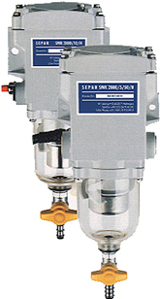
The “Rolls Royce” solution is to have two primary filters in parallel, so you can continue operating the engine while you change out one. I think this is rather overkill on a sailing yacht.
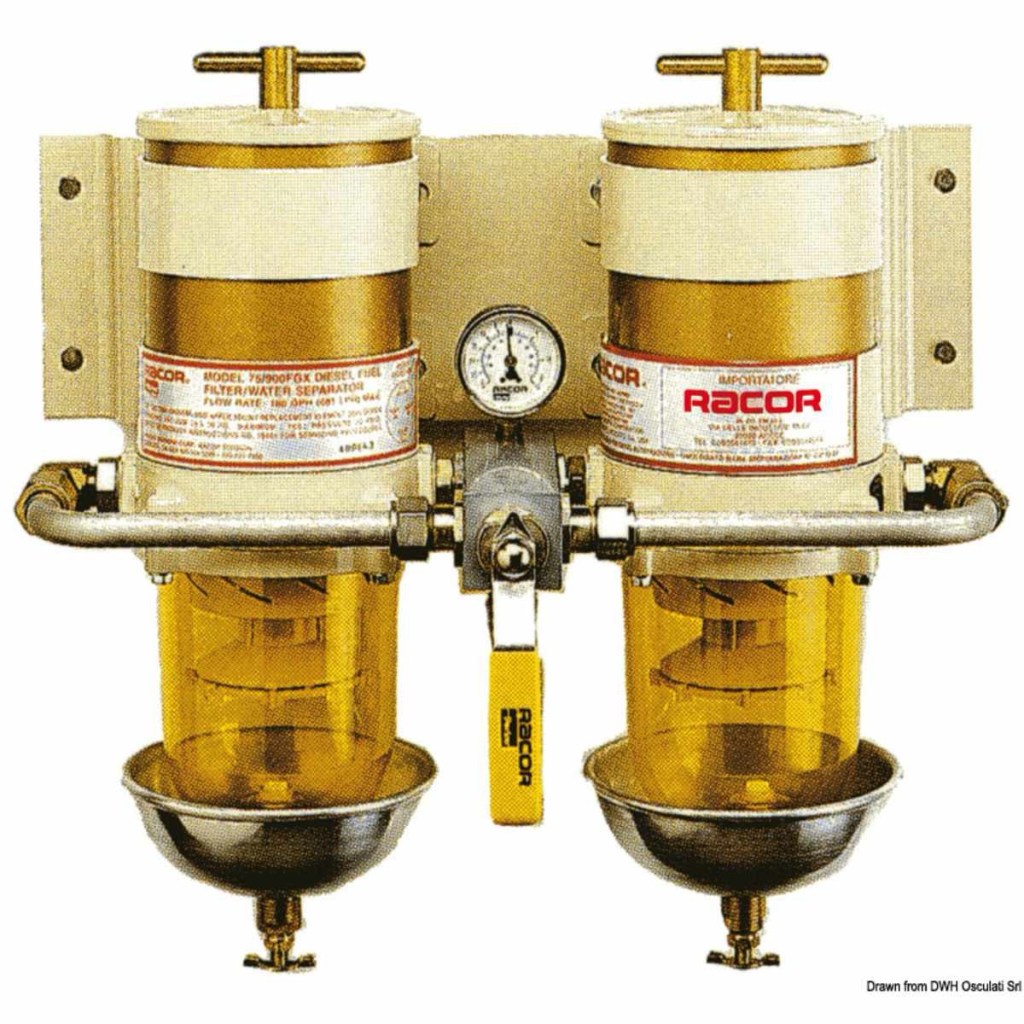
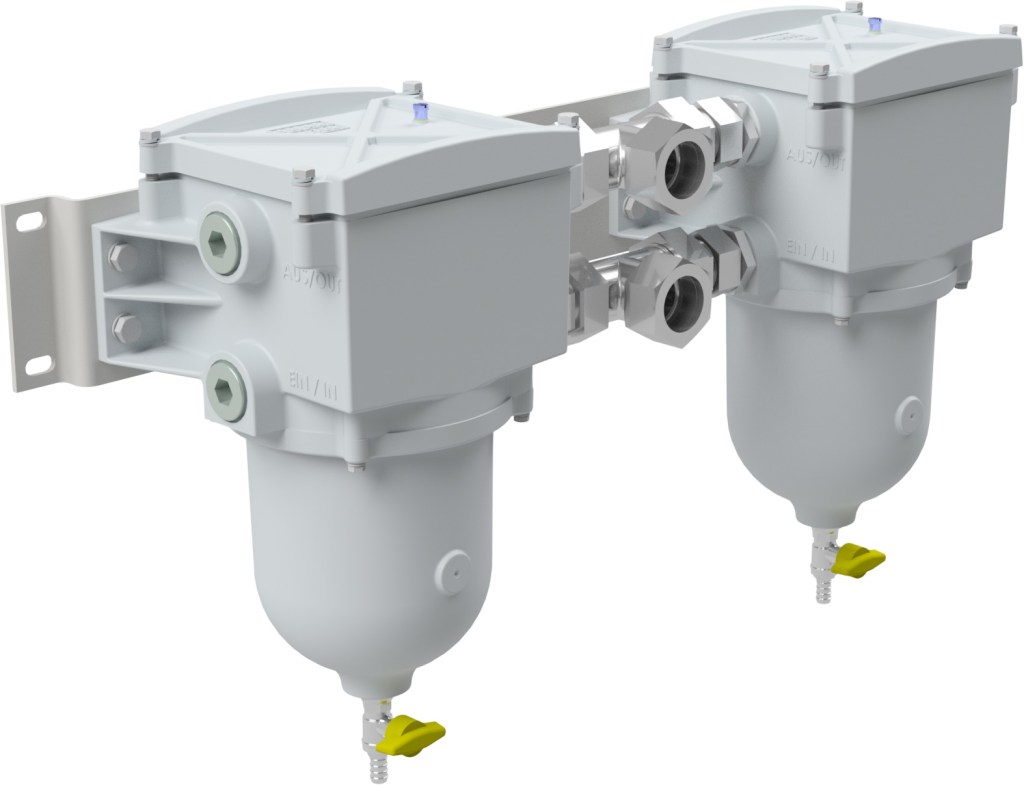
I chose the Separ system single filter which has worked well and is easy to change the filter. However it does have 4 small bolts to undo on the top requiring a small spanner. The Racor has one connection on top of the filter to unscrew with no spanner needed.
You can see the space on Dragon II is rather limited, especially now the diesel dipper has been installed. You will need to allow enough space to access and remove the filter as well as the ability to drain and contamination from the base of the filter. and clearance
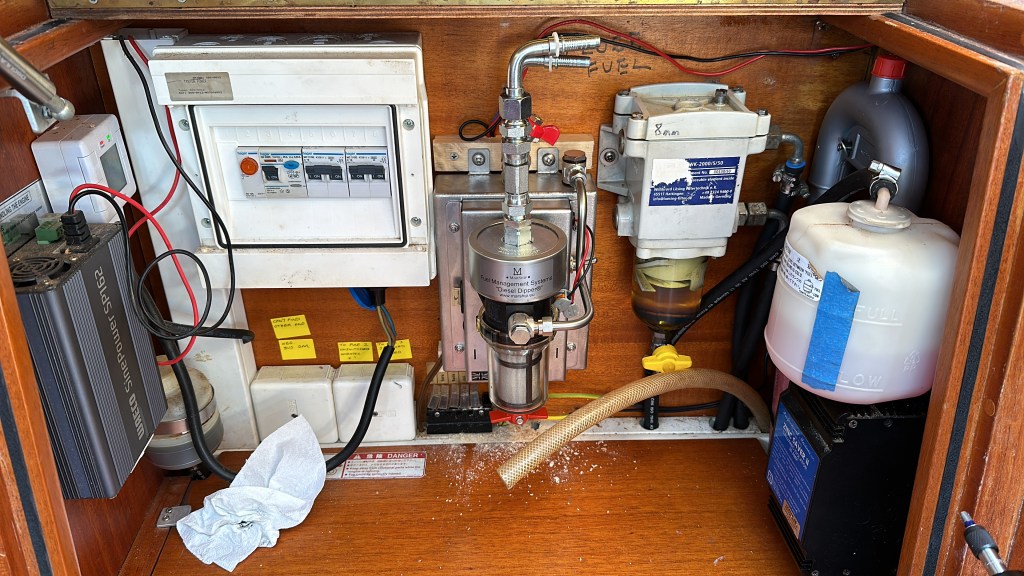
On Dragon II this primary filter is above the engine and above the fuel tank. This makes it easy to change the filter and bleed the system. My procedure is
- Place paper towels below the filter housing
- Close the supply valve on the fuel tank. This stops fuel running back into the tank when I open the filter. If this happens it is a big process to bleed all the air out.
- Remove the top of the filter housing and change the filter.
- Loosen the bleed valve on the top of the filter.
- Top up the fuel filter with fresh diesel.
- Replace the top of the filter.
- Close the bleed valve
- Open the supply valve on the tank.
- Start the engine.
With this careful approach it is rarely necessary to bleed the system at the engine.
 A Dragon's Tale