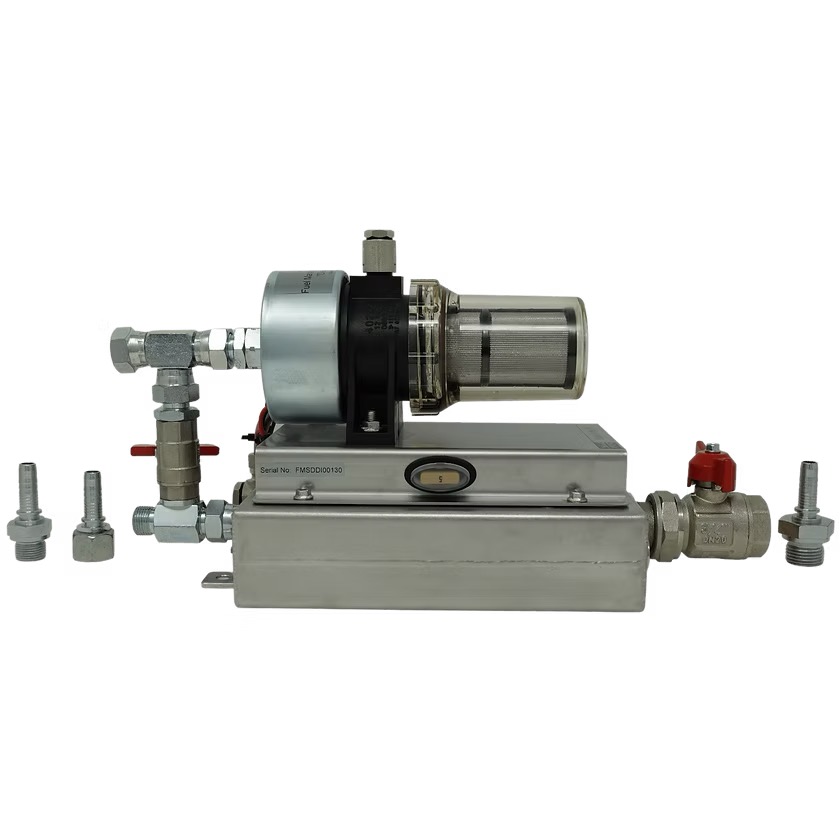
The Swedes say there are two types of sailors, those who have hit a rock and those who are about to! To this I would add, those sailors who have had a diesel contamination and those who are about to! Why? Because if you haven’t got a drain point right at the bottom of your fuel tank, and very few have, then any water and contaminants will accumulate in the bottom of your tank. You will be blissfully unaware of this because the feed line to your engine does not reach to the bottom of the tank. That is until you motor in very rough seas. The tank gets churned up and the gunk clogs your fuel filters. You curse a lot and change the filters and because it is calm again everything seems fine. Chances are there is more gunk and/or water sitting on the bottom of the tank waiting for conditions to allow it to make your life hell once again.
Case study ( Me! On Dragon II)
I had been motoring for an extended time in very rough seas and this is the mess I found in the fuel filter.
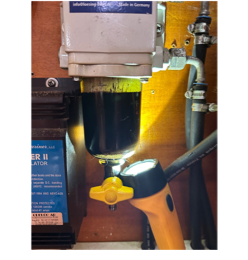
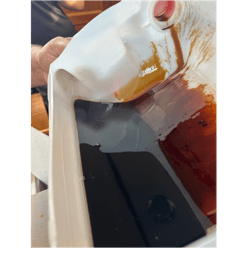
I had recently been using a fuel additive from Marine 16 and wondered if over dosing had caused this issue. Talking to Peter at Marine 16, he reassured me that over dosing would not be an issue and he believed the contaminant was asphaltenes and was not diesel bug.
Techy bit: Asphaltenes are heavy, dark, hydrocarbon molecules that can precipitate out of solution due to high pressure, heat, or fuel aging, creating a sticky, tar-like sludge. This sludge clogs fuel filters, fouls injectors, and reduces engine efficiency.
Removing the inspection hatch on the top of diesel tank and shining a bright torch, revealed more at the base of the tank. I managed to find a company who came and sucked out 15 litres of fuel which with a torch shining into the fuel tank suggested was all of. Given it was so sticky, they took the filter housing away to thoroughly clean it. The bill for this work and disposal of the diesel was Euro 600!
While the problem was fixed, it could easily reoccur. With that in mind I invested in Marine 16’s “Diesel Dipper”. Not cheap, but this is a quality product and pretty much guaranteed a clean tank.
The hardest part was fitting the dip tube which reaches to the bottom of the tank. (Peter helped with the design). This tube takes the fuel to the clever filtering system and returns the filtered fuel to the tank. Typically, it is left running whenever the engine is on. Periodically you can drain from the base of the filter to remove any collected contaminant whether water or anything else.
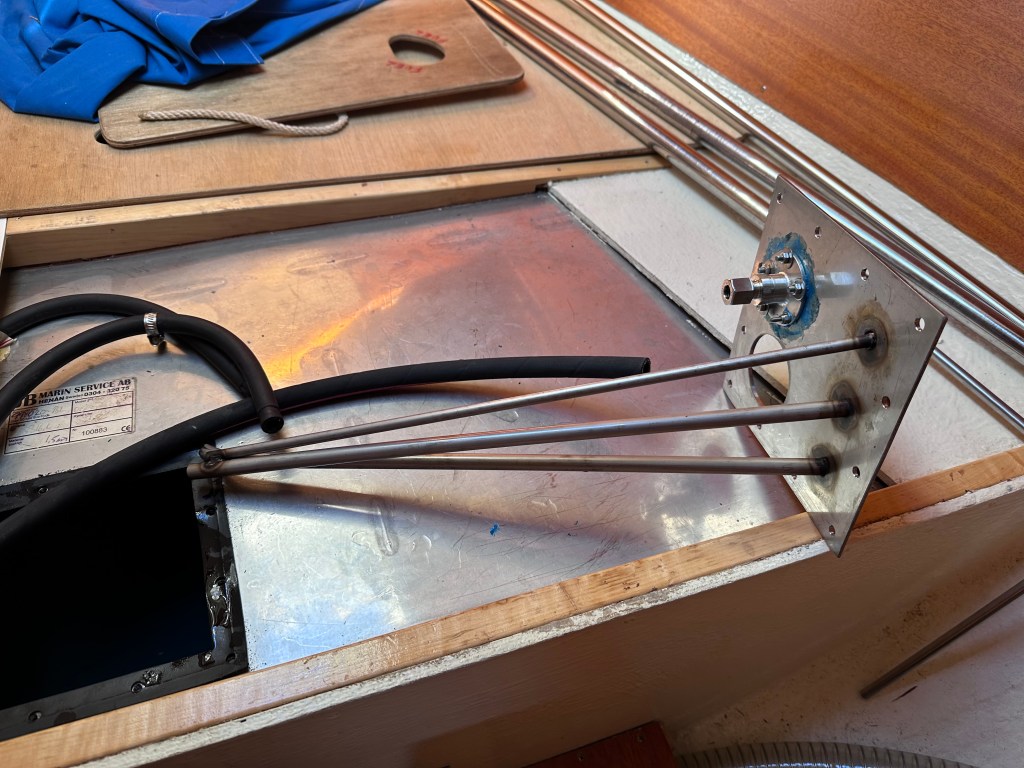
Whenever refuelling I now dose the diesel with the required amount of Marine 16’s fuel additive “ Diesel Fuel Complete”.
Keeping your diesel in good conditions
These days, due to the prevalence of biodiesel which tends to absorb more water, it is advised to only have in your tank what will be used in 6 months. When we were once advised to leave the boat over wintered with a full tank to avoid condensation, this is now widely recognised that the amount of condensation is minimal and it is best to leave the boat with as little diesel as practical and to dose it with a biocide such as Marine 16 “Diesel bug system”
 A Dragon's Tale